Sleep · 6 min read
Building an Evening Wind-Down Routine with Red Light
A short red light session can anchor a calmer evening. Here is a simple 40-minute wind-down routine, plus what to keep in it and what to leave out.
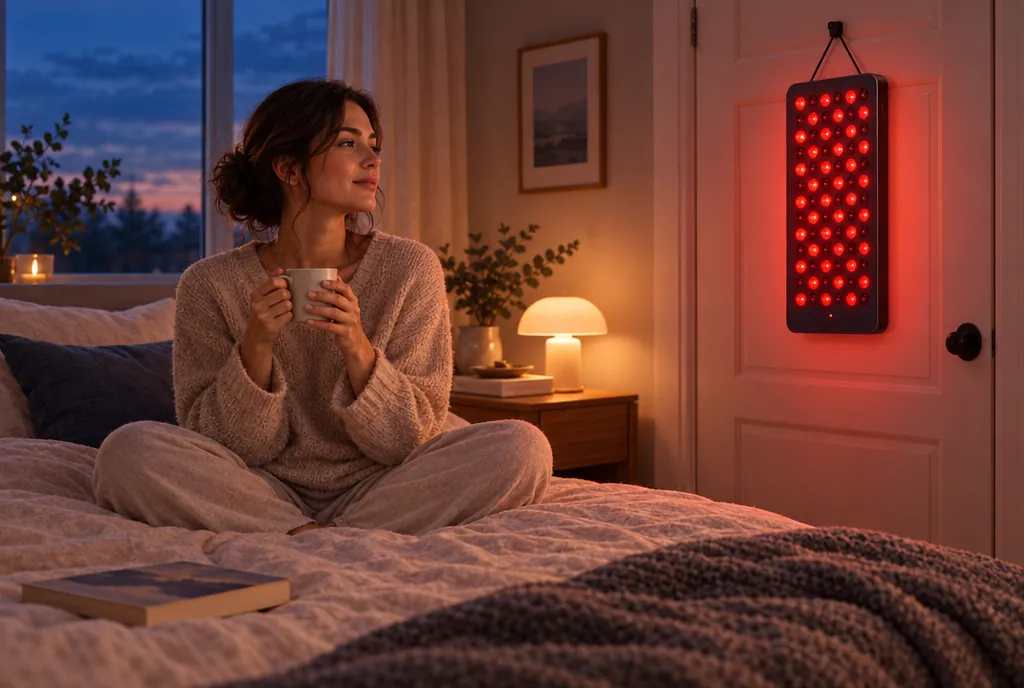
Evenings tend to fill up. Work spills over, screens stay on, and by the time the house goes quiet, many of us are still running at daytime speed. A consistent wind-down routine is one of the simplest ways to signal that the day is done, and for many Solbeam customers, a short red light session has become a calm anchor for that routine.
This guide covers how to build a 30 to 45 minute evening routine around a red light session, what to keep in it, and what to leave out.
Why red light fits the evening
Compared with bright overhead lighting or a phone screen, a red light panel gives off a warm, low glow. Many people find it more relaxing to sit in than a brightly lit room, and the session itself creates a natural pause: it is hard to scroll through email while you are sitting still in front of a panel with your glasses on. Our evening routine is designed to promote relaxation through that combination of warm light, stillness and a predictable sequence.
We are careful not to promise more than that. Red light therapy is not a substitute for good sleep habits, and if you regularly struggle to rest, it is worth talking with a healthcare professional.
The 40-minute wind-down
Here is a sequence that works well for most people. Start it roughly an hour before you want to be asleep.
- Dim the house, 5 minutes: Turn off overhead lights in the rooms you will use and switch to lamps. Set your phone to do-not-disturb and, if you can, put it on a charger outside the bedroom.
- Light session, 10 to 15 minutes: Sit 8 to 12 inches from your panel with protective glasses on. Focus on the areas that carry the day's tension, such as the upper back, shoulders or legs.
- Slow stretching, 10 minutes: Gentle, unhurried movements while the room is still lit by a lamp.
- Quiet activity, 10 to 15 minutes: Reading a paper book, journaling, or simply sitting with a warm, caffeine-free drink.
Tip: set your panel's built-in timer and let it be the signal to move to the next step. When the light switches off, the stretching begins. Removing the need to check the clock keeps the whole routine calm.
Setting up for evening sessions
Choose a smaller, quieter setup
Evening sessions are usually seated and focused on one or two areas, so a full-body panel is not essential. The Solbeam 300 fits on a dresser or nightstand and covers the shoulders or lower back at a comfortable seated distance. If your main panel lives in a home gym, consider a smaller second panel in the bedroom so the routine does not involve walking back into a bright room.
Keep your eyewear at hand
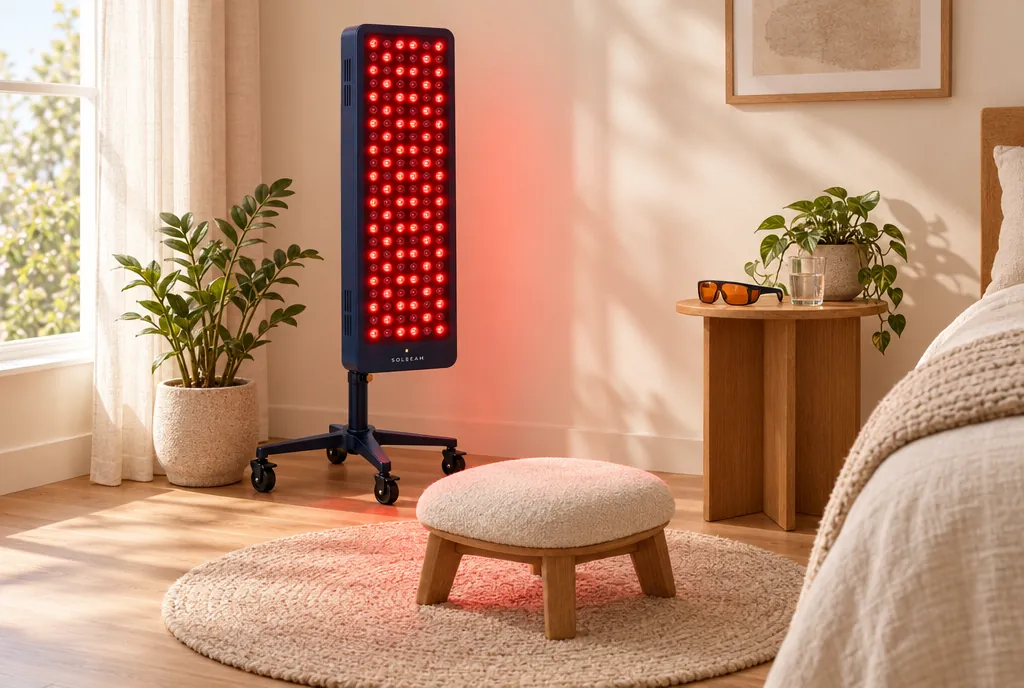
Even in a dim room, we recommend Protective Glasses for every session. Keep them on the nightstand next to the panel so they are part of the setup, not something you have to go looking for.
Add a wrap for the end of long days
For people who sit at a desk all day, the Neck & Shoulder Wrap is a comfortable way to fit a session in while reading or listening to music. It lets you lean back on the couch instead of sitting upright in front of a panel.
Gentle stretches for the wind-down
Keep these slow, and breathe out for longer than you breathe in.
- Child's pose: 60 seconds, arms long, forehead resting on the floor or a pillow.
- Seated forward fold: 60 seconds, knees soft.
- Lying twist: 45 seconds per side.
- Legs up the wall: 2 to 3 minutes.
- Neck release: ear toward shoulder, 30 seconds per side.
What to leave out of the evening routine
A wind-down routine works by removing stimulation, so a few things are worth keeping out of it:
- Hard training. Save intense sessions for earlier in the day if you can.
- Bright screens. If you need a device, lower the brightness and keep it brief.
- Late caffeine. Many people find an afternoon cutoff helps their evenings feel calmer.
- Long light sessions. 10 to 15 minutes is plenty. Longer is not more relaxing.
A sample week
Consistency matters more than perfection. A realistic week might look like this:
- Monday to Thursday: The full 40-minute routine, with a 10 to 15 minute light session.
- Friday: A shorter version: a 10-minute light session and five minutes of stretching.
- Saturday: Skip the panel if you are out, but keep the dim-the-house step.
- Sunday: The full routine, with a slightly longer quiet activity to reset for the week ahead.
Expect the routine to feel unfamiliar for the first week or two. Most people find it becomes automatic around the third week, and switching on the panel starts to feel like the natural end of the day.
Sharing the routine
If you live with a partner or family, a shared wind-down can be easier to keep than a solo one. A single panel can serve two people with back-to-back 10-minute sessions, and a pair of protective glasses for each person keeps it simple. Our bundles include eyewear and mounting, which helps if you are setting up a bedroom panel from scratch.
The goal is not a perfect evening. It is a reliable one: a predictable sequence that tells your body and mind the day is winding down. Start with the light session and one stretch, and build from there.
This product is not intended to diagnose, treat, cure, or prevent any disease. This article is for general wellness information; consult a healthcare professional with questions about your own health.